
In the world of modern software delivery, stability is not the absence of failure – it’s the speed and precision with which failures are detected, addressed, and resolved. For testing teams, this shift is especially significant. No longer is the tester’s role limited to finding bugs during a designated QA phase; today, testers are vital players in a continuous, cross-functional effort to maintain quality in production.
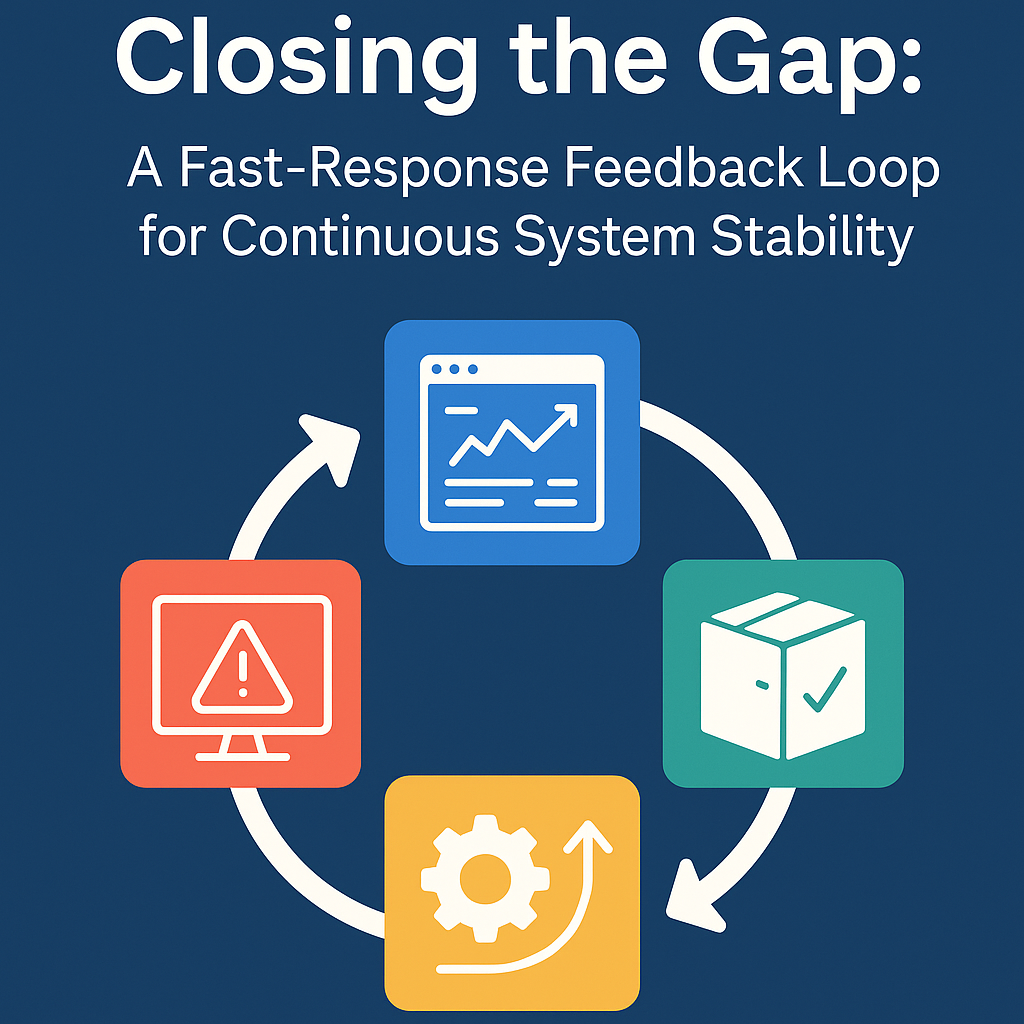
One of the most effective ways to achieve this is by implementing a real-time feedback and recovery mechanism that operates across the software lifecycle – from production monitoring to testing environments and all the way back into the development pipeline.
1. Automated Failure Detection and Immediate Notification
The first step in managing production issues is to know they exist – immediately and reliably. By embedding failure detection logic within both server and client code, systems can automatically flag runtime errors, unexpected behaviors, or performance degradations.
Crucially, these failures shouldn’t just be logged – they should trigger real-time alerts sent directly to testing and QA teams. Early and precise detection allows testers to assess the impact, replicate issues, and collaborate with developers on rapid fixes. It also prevents minor issues from evolving into major incidents.
In practice, this means instrumenting the codebase with telemetry hooks, error capture tools, and custom monitoring scripts. But what makes this mechanism powerful is its integration into the testers’ daily workflows – notifications routed to issue tracking tools, dashboards, and even direct messaging platforms.
2. A Centralized Dashboard for Monitoring Failures
Having a single, accessible view of all detected failures is a critical enabler for efficient triage and response. A well-designed dashboard gives testers and QA managers the visibility they need to:
- Identify trends and recurring issues
- Prioritize the most critical or user-facing failures
- Track the status of fixes and regression tests
- Coordinate with developers on targeted investigations
This level of transparency is not only valuable for operational awareness – it’s a cornerstone of test strategy. With data-driven insights into production behavior, testers can refine test coverage, improve risk-based testing, and uncover edge cases that pre-release tests might have missed.
3. Rapid Release and Progressive Deployment Mechanisms
Once a fix is ready, the ability to release it quickly – and with minimal risk – is essential. Progressive deployment mechanisms such as canary releases, feature flags, and blue-green deployments allow teams to push fixes to a small subset of users, monitor behavior, and gradually roll out changes.
This approach offers multiple benefits for QA:
- It reduces the blast radius of new defects
- It enables real-time validation in production-like conditions
- It provides a feedback loop to confirm that fixes are effective before full deployment
From a testing perspective, this means working closely with DevOps and development to define rollback criteria, monitoring metrics, and test validation steps for each stage of the release.
The Hidden Advantage: Test Intelligence
While these three components are increasingly supported out-of-the-box by modern development, deployment, and monitoring platforms, the real challenge lies in making them actionable. And that’s where the testing organization shines.
By integrating test expertise directly into the feedback loop, teams can react faster and smarter. Testers contribute not only in diagnosing and validating issues but also in proactively preventing them – using production data to guide test creation, automation prioritization, and system-level validations.
Ultimately, building this fast-response loop enhances more than just system uptime – it fosters a culture of shared responsibility, rapid learning, and continuous improvement. And in that environment, testers move from being gatekeepers to becoming accelerators of quality.
Final Thoughts
Stability in modern systems comes from adaptability. With real-time error detection, centralized observability, and fast, controlled deployments, testing teams are better equipped than ever to close the gap between discovery and recovery. Investing in this feedback infrastructure is not only a technical decision – it’s a strategic one that directly impacts the velocity, quality, and resilience of your entire software lifecycle.