
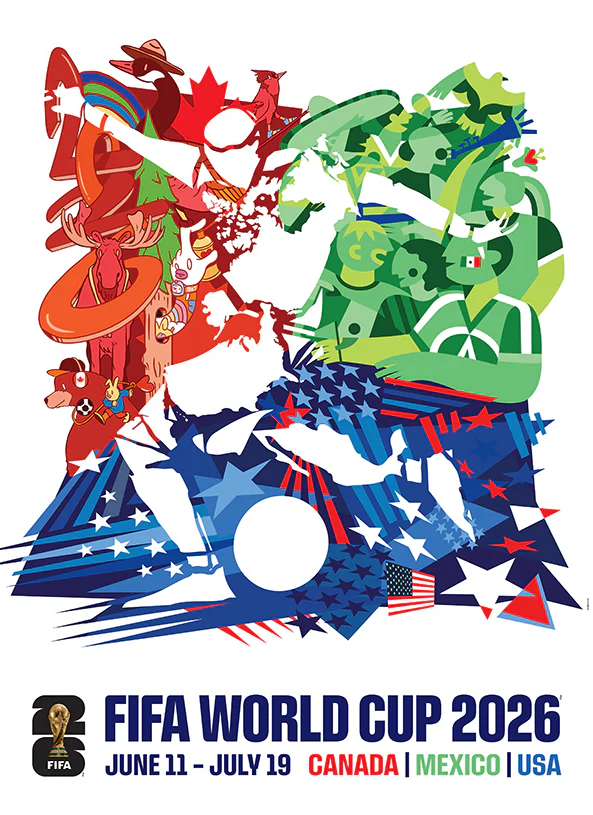
The World Cup has started again. It always brings that familiar mix of noise, anticipation, and too much football everywhere you look.
It’s one of those moments when the whole world feels slightly in sync for a while.
Back in 2010, during the World Cup in South Africa, we wrote a post comparing football teams to software development teams.
At the time, it felt like a simple analogy. Even a bit playful.
I re-read that old post recently.
What surprised me wasn’t how much has changed since then.
It was how much hasn’t.
Football looks different now. The decisions don’t.
Watch a World Cup match today and it feels almost like a different sport in terms of what surrounds it.
Everything is measured. Tracked. Visualized.
Heat maps. Expected goals. Sprint speeds. Real-time tactical breakdowns. VAR checking incidents from multiple angles.
There’s a lot more information floating around the game than there used to be.
But when you listen to coaches after a match, it still comes down to very familiar explanations.
We lost concentration for a few minutes.
We didn’t adapt fast enough.
We made mistakes at the wrong time.
We stopped playing as a unit.
All that data, and the story still sounds human.
Software testing is going through the same phase
Something similar is happening in software right now, especially with AI entering the picture.
We now have AI generating test cases, tools that promise “self-healing” automation, predictive systems for defect risk, and dashboards that show more metrics than anyone can realistically process.
If you just look at the tooling, it feels like we should be much closer to “solving” testing by now.
But on the ground, the questions haven’t really changed.
Can we ship this?
What might break?
Did we test the right things, or just a lot of things?
And the one that always comes back: are we actually confident?
That last one is still the hardest.
More data didn’t remove uncertainty
Football is a good reminder that data doesn’t automatically create certainty.
A team can dominate every statistic and still lose the match. And it happens more often than people like to admit.
Software isn’t that different.
You can have high test coverage, passing CI pipelines, lots of automation, green dashboards everywhere — and still end up with surprises in production.
I’ve seen that gap enough times to be cautious about assuming that more visibility equals less risk.
It usually doesn’t.
It just means we see more of what we don’t fully understand yet.
AI helps, but it doesn’t decide
AI is genuinely useful in testing. That part shouldn’t be downplayed.
It speeds things up, helps explore more combinations than we could manually, and catches patterns that are easy to miss.
But it doesn’t really answer the important questions for you.
It doesn’t know what matters in your product. It doesn’t know what risk is acceptable. It doesn’t know what “good enough” means for your users right now.
That part still sits with people.
And I don’t think that’s going away anytime soon.
The human part keeps showing up
The more I look at both football and software, the more I keep coming back to the same thing.
The moments that actually decide outcomes are rarely the ones you can fully script.
A player notices a gap no one else saw.
A tester gets uneasy about something that technically works.
A developer asks one more question before signing off.
None of that fits neatly into metrics or automation flows.
But those are often the moments that matter most.
Looking back at 2010
What’s funny about that old post is that it doesn’t feel outdated. It just feels simpler.
Today we talk more about AI in software testing, DevOps pipelines, TestOps, continuous delivery, observability, metrics, and automation at scale.
All of that is real. All of it matters.
But underneath it, the structure is still the same.
Good teams communicate well.
They notice problems early.
They don’t rely only on process to save them later.
They build shared confidence before things go live.
That’s true in football.
And it’s still true in software.
One last thought before the next World Cup
Every World Cup brings new tools, new analysis, and new ways to explain what we’re seeing.
And every time, we still end up circling back to the same ideas.
Because despite all the progress in AI, automation, and testing tools, the hardest question hasn’t really changed:
Do we trust this enough to release it?
That question still decides matches.
And it still decides software releases.